Learn a LOT more at: www.EnergyJustice.net/incineration/
Incinerator Life Spans

- Average lifespan of the 44 trash incinerators that have closed from 2000 through 2020 was just 23 years.
- Few trash incinerators operate beyond a 30-40 year life time. Covanta Delaware Valley is 30 years old in 2021.
- Only four have made it past 40 years of age without being completely rebuilt, and much younger incinerators have been showing serious signs of aging
- Rebuilding the Harrisburg, PA incinerator when it was 30 (first opened in 1972) bankrupted the city in 2011 as we warned them in 2003.
Source: Trash Incinerator Closures: 2000-2020. http://www.energyjustice.net/incineration/closures.pdf
Incineration is the Most Expensive and Polluting Way to Manage Waste or To Make Energy
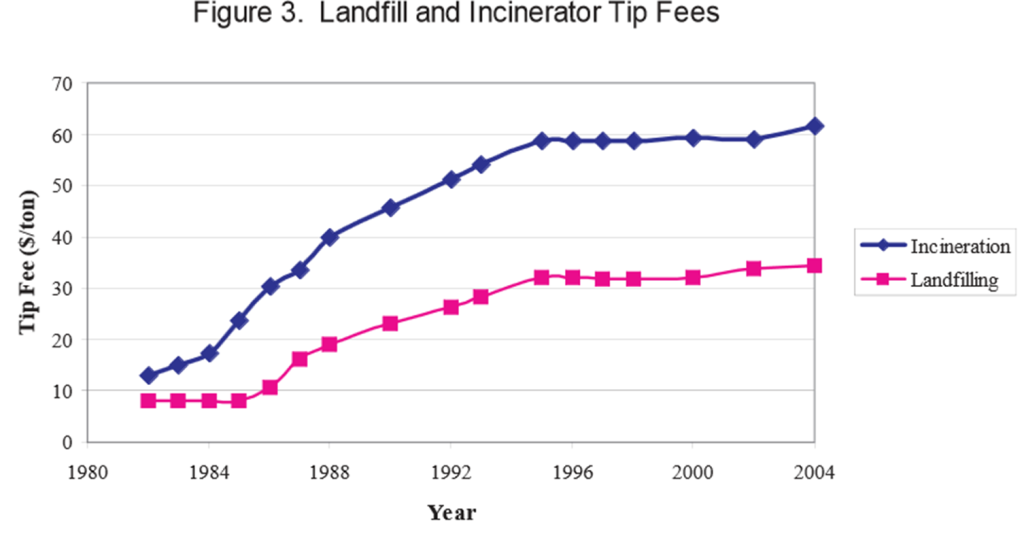
- Trash incineration is more expensive than landfilling
- It’s only competitive in Delco because…
- The county subsidizes them with discounted ash dumping
- The incinerator is the largest in the U.S. (economy of scale)
- The incinerator lacks half of the pollution control systems most incinerators have, which are the most expensive part of plant operations
- It’s only competitive in Delco because…
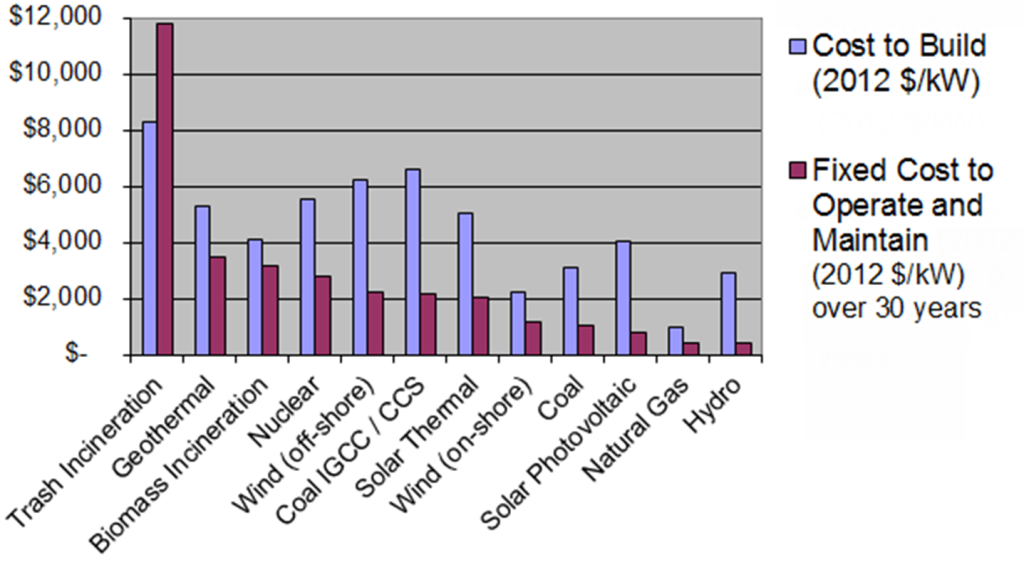
- Trash incineration is more expensive than other power generation, even though they get paid to take their “fuel”
- Trash incineration is more polluting than coal burning
- Trash incineration (and landfilling incinerator ash) is more polluting than directly landfilling waste
Incineration is the Most Expensive Way to Manage Waste
Most Expensive Way to Make Energy
Incineration is Worse than Coal
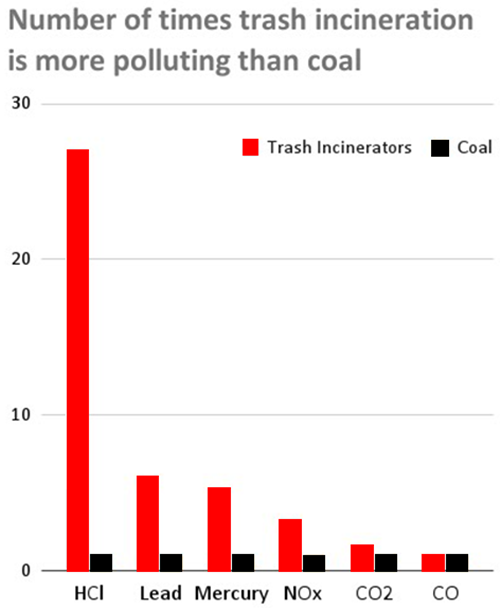
- Dioxins / furans (28x)
- Hydrochloric Acid (27x)
- Lead (6x)
- Mercury (5x)
- Nitrogen Oxides (3x)
- Carbon Dioxide (1.65x)
- Carbon Monoxide (same)
- ——- …exceptions… ——-
- Fine Particulate Matter (.53x)
- Sulfur Dioxide (0.36x)
Learn more at: www.energyjustice.net/incineration/worsethancoal
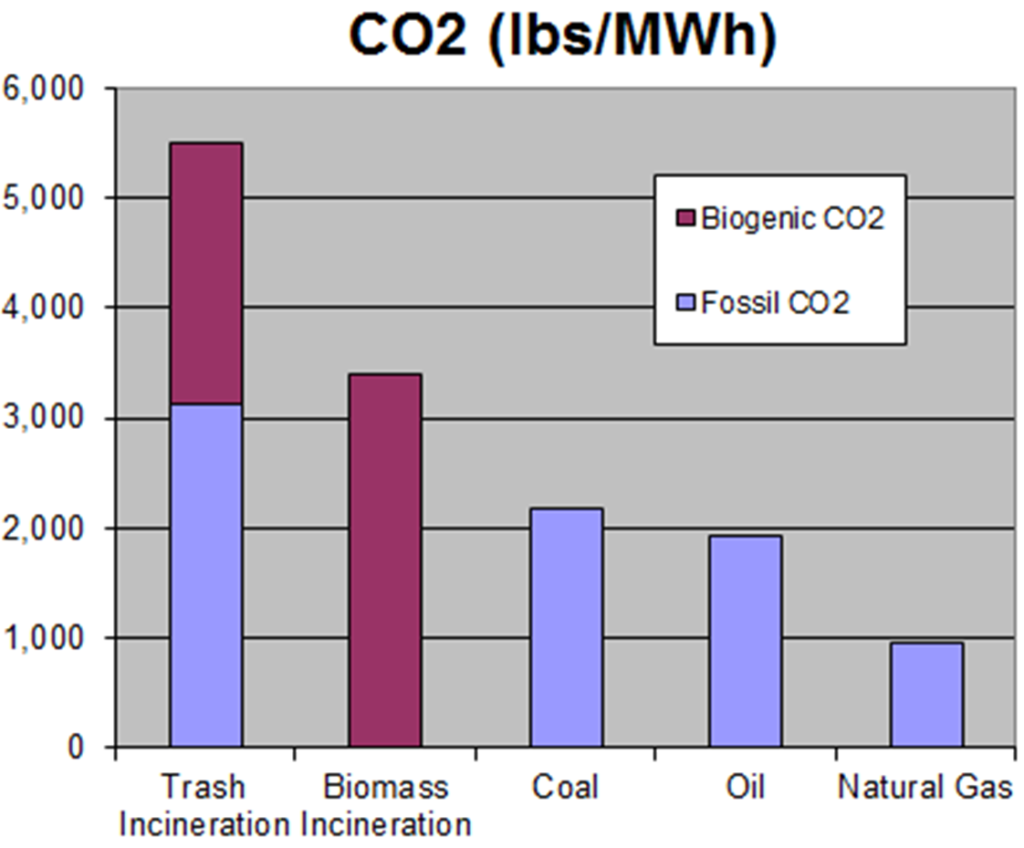
Global Warming Pollution
Shown below are the smokestack CO2 Emissions from U.S. Power Plants. Data is in pounds of CO2 per unit of energy produced (lbs/MWh)
Incineration Worse than Landfills
Incinerators still require landfills for their toxic ash
Choice is NOT landfill vs. incinerator, but:
landfill vs. incinerator AND a smaller, more toxic landfill
OR…
Zero Waste and minimal landfilling
- Incinerators still require landfills for their toxic ash
- 30 tons of ash produced for every 100 tons burned
- In terms of leachate, think of coffee beans vs. coffee grounds. Pour water over beans and you won’t get coffee, but grind them up and increase their surface area, pour water over them, and you get coffee. Ash is similar in that its higher surface area means more toxic chemicals can leach out, polluting groundwater.

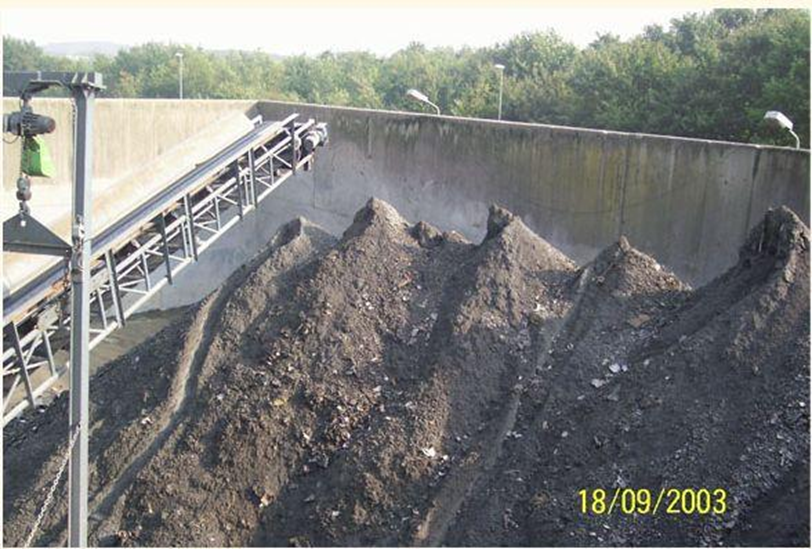
Covanta Claim: we provide “landfill-free disposal”
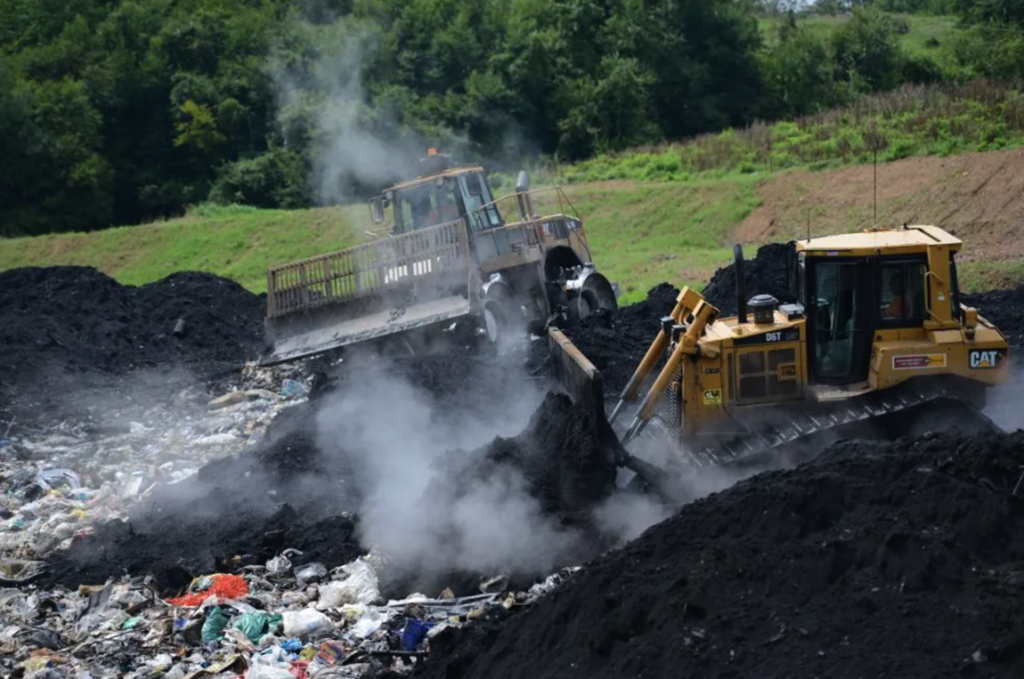
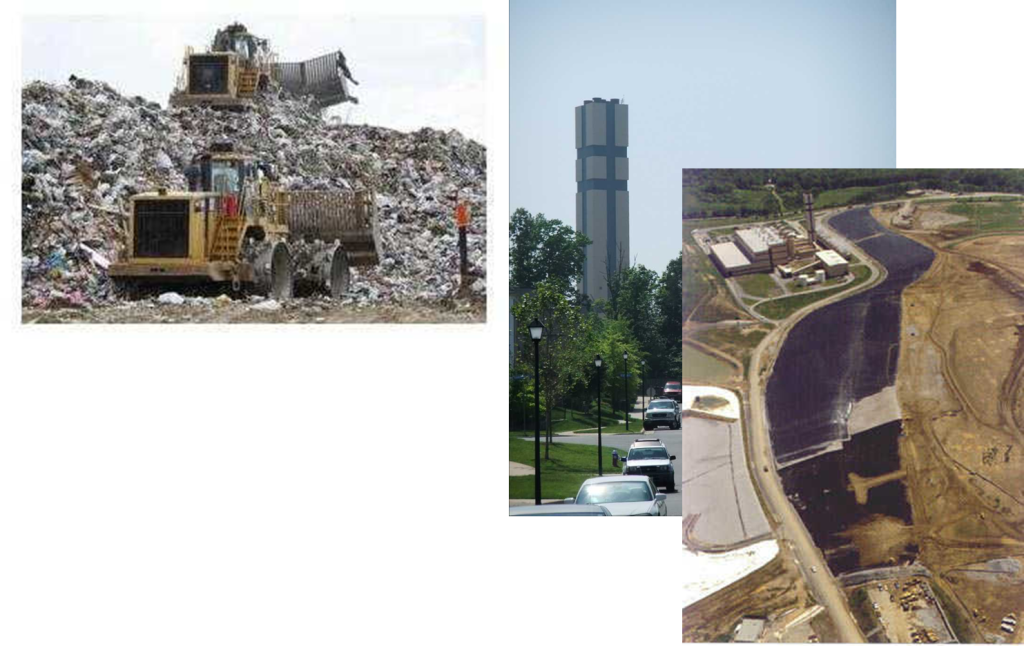
Truth: Covanta’s toxic ash is being dumped at the Delaware County Solid Waste Authority’s Rolling Hills Landfill in Berks County
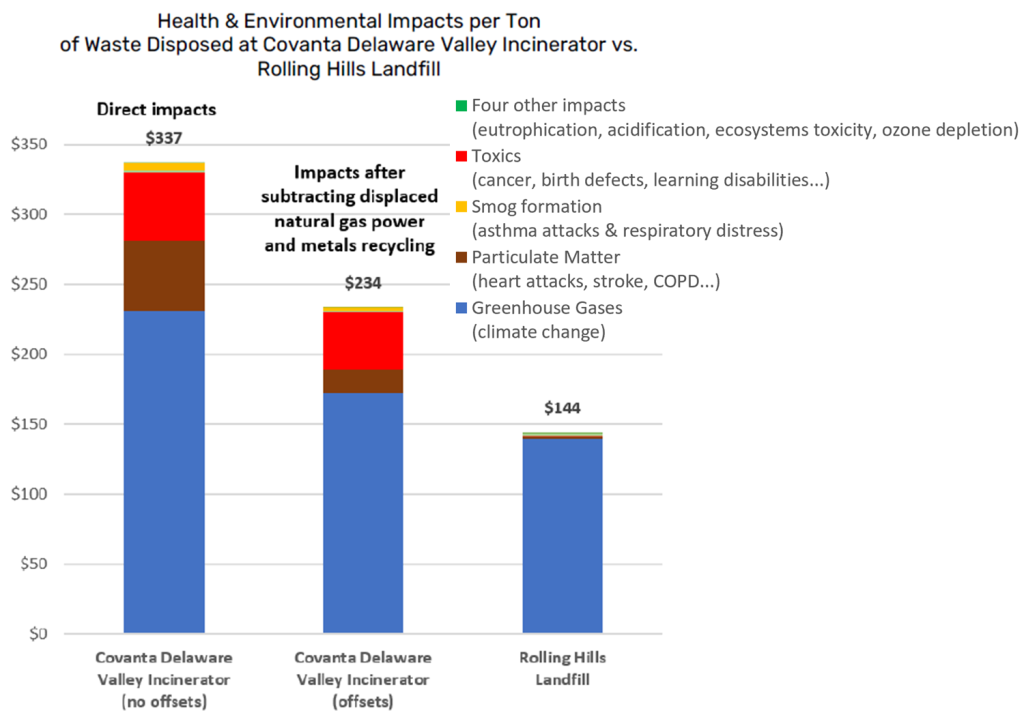
How Do We Compare Landfilling vs. Incineration and Ash Landfilling
- Human health impacts
- Nitrogen Oxide emissions (asthma)
- Particulate emissions
- Toxic and Cancer-causing emissions
- Eutrophication
- Acidification (acid rain…)
- Ecosystem toxicity
- Ozone depletion
- Smog formation
- Global warming
And we should also look at…
- Cost
- Jobs
- Population impacted
- Environmental justice
Delaware County municipalities pay around $83/ton to disposal of trash, but these externalized health and environmental costs are on top of that amount, paid in medical bills and consequences of climate change.
Incinerating trash and landfilling ash is 2.3 times as harmful as directly landfilling trash.
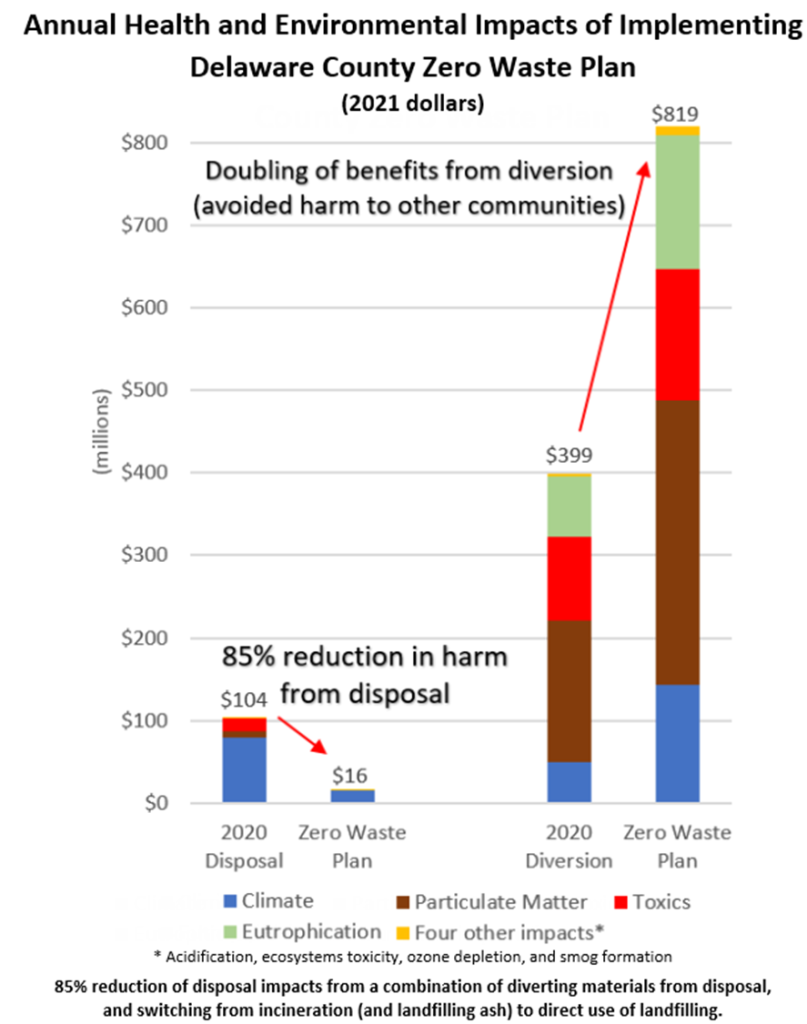
While the last chart looked at externalized health and environmental costs per ton, this looks at the entire impact of Delaware County’s waste system (all tons in a year), showing $104 million dollars of health and environmental costs per year.
Adopting the Zero Waste Plan (ending incineration and reducing waste) cuts those harms by 85%, while the benefits (avoided harms) that already happen from current recycling efforts (about $400 million a year) would be doubled.
Examples of these avoided harms are not needing to log or mine new raw materials because we’re now consuming less, reusing/repairing, recycling and composting.
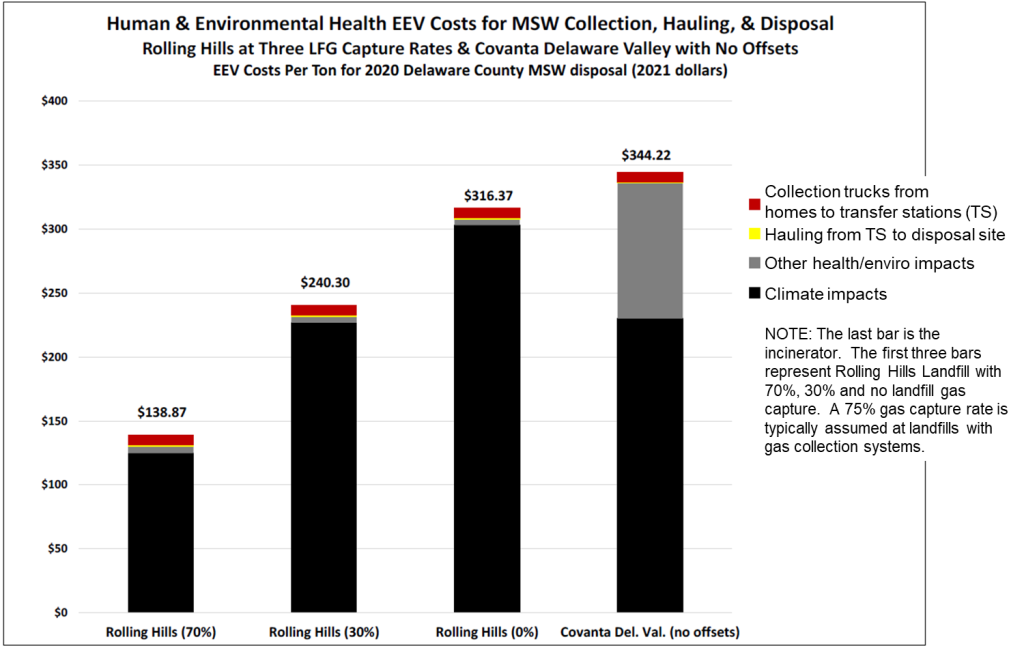
Transportation Impacts are Insignificant
Yellow lines show difference between hauling from two transfer stations 3 and 13 miles from the incinerator (last bar) vs. trucking all trash to landfill 60 miles away (first 3 bars)
Examining the 20-year CO2e impact, we again see the insignificance of transportation.
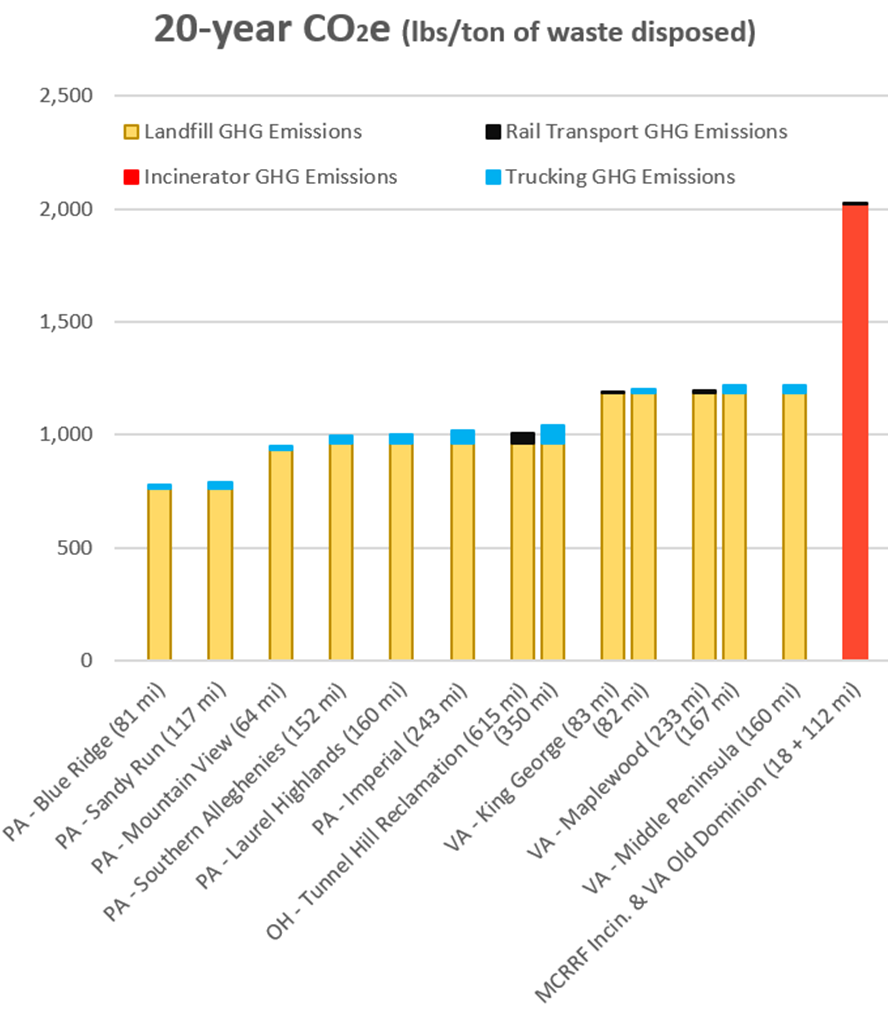
“Beyond Incineration: Best Waste Management Strategies for Montgomery County, Maryland”
www.energyjustice.net/md/moco
Transportation climate impacts (blue/black) are minor compared to incineration (red) or landfilling (yellow), and no realistic transportation distance can justify incinerating in-county over hauling waste to distant landfills.