
Internationally peer-reviewed definition of Zero Waste:
“The conservation of all resources by means of responsible production, consumption, reuse, and recovery of all products, packaging, and materials, without burning them, and without discharges to land, water, or air that threaten the environment or human health.”
Functionally, Zero Waste is a management system that means zero incineration and putting specific programs in place to reach at least 90% reduction in waste being landfilled, while consistently working for further reductions. It also means changing how waste is managed on the back end to avoid the gas, odor, and leachate impacts of conventional landfilling. These steps are known as material recovery and biological treatment (MRBT) prior to landfilling the small, stabilized residual.
Source: Zero Waste International Alliance, https://zwia.org/zero-waste-definition/
EPA is now in the process of reviewing THEIR waste hierarchy to determine if potential changes should be made based on the latest available data and information.
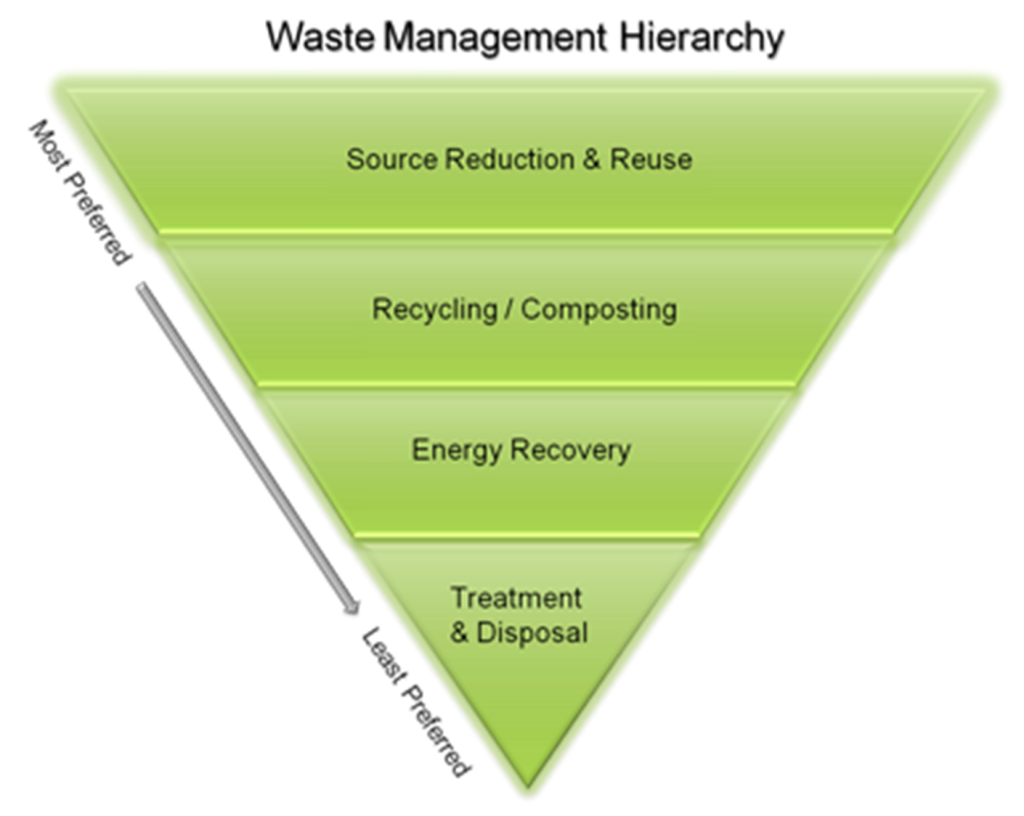
We follow a more rigorously developed hierarchy below:
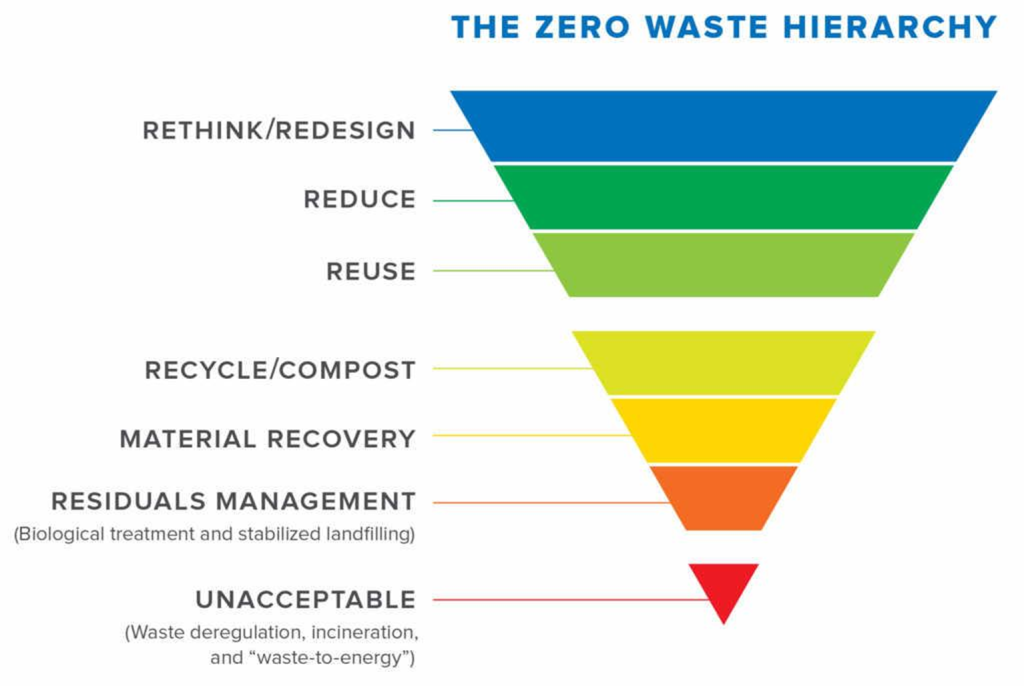
- Rethink / Redesign
- Reduce
- Source Separate:
- Reusables
- Recycle (multi-stream)
- Compost
- Waste
- Research to see what is left, and encourage redesign
- Recovery: mechanically remove additional recyclables
- Anaerobically digest, then aerobically compost residuals
- Stabilized (digested) residuals to landfill
Learn more at: www.energyjustice.net/zerowaste
The back end is still a landfill…

- Direct landfilling (bad, but better than incineration)
- Leachate (toxics)
- Air emissions (toxics, methane, odors)
- Incineration –>toxic ash to landfill (most polluting and expensive option)
- Leachate (even more toxics)
- Air emissions from ash blowing off site (toxics)
- Anaerobic digestion –> landfill (best option; avoids gassy, stinky landfills)
- Odor, leachate and air emissions highly minimized
Getting to Zero Waste
- Unit-based pricing – a.k.a. “Pay/Save as You Throw”
- Reduces waste by 44% on average right away; most cost-effective strategy*
- Curbside composting collection
- Provide right-sized bins
- Deconstruction

Photo Credit: C. Seldman
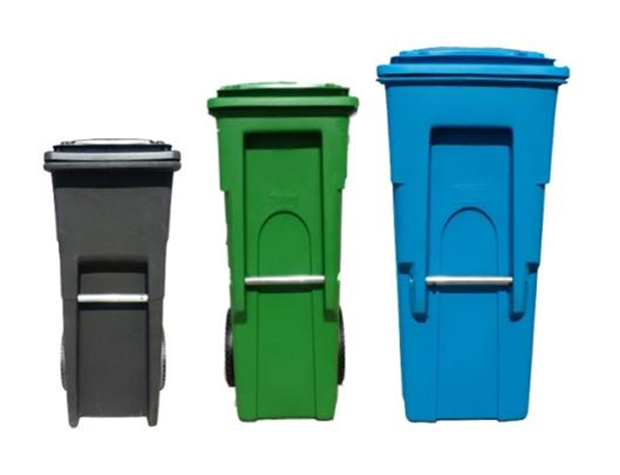
64-gal blue recycling bin
32-gal green compost bin
16-gal black trash bin
* For good resources on unit-based pricing, see resources cited on pages 16-17 in the Beyond Incineration report. On deconstruction, see Reclamation Administration.
Delaware County’s NEW Zero Waste Plan
Delaware County, PA is home to the nation’s largest waste incinerator, in the City of Chester. It is the largest industrial air polluter in the county, and the county is now moving away from incineration.
The county’s Zero Waste Plan includes a comprehensive life cycle analysis (LCA) of incineration vs. landfilling vs. zero waste.
Find the draft plan here and the LCA summary and full writeup here.
You can seem of the results of this analysis here.